
![[NEEDS INPUT: alt text]](https://cdn.sanity.io/images/iexz7ctt/production/2e14e4e3e4060bfc33a09c2a02aa56aa6280838f-11648x8736.tif)
Overview
Travis County Civil and Family Courts facility balances transparency, security, and care to make the justice experience more accessible for residents.
![[NEEDS INPUT: alt text]](https://cdn.sanity.io/images/iexz7ctt/production/e6fd4629666c07fc9790ce7e12426ed83847ae85-11586x8736.tif)
![[NEEDS INPUT: alt text]](https://cdn.sanity.io/images/iexz7ctt/production/1666af34871b46210ec37b5b26bbe285df3c952a-6236x4158.tif)
![[NEEDS INPUT: alt text]](https://cdn.sanity.io/images/iexz7ctt/production/6b95bfb70df986c89d51990f8c89b7d1bb7b30ae-5159x3439.tif)
![[NEEDS INPUT: alt text]](https://cdn.sanity.io/images/iexz7ctt/production/eeaa58367883d7d1b03b74e3fbd96fbba20fbf57-11576x8668.tif)
![[NEEDS INPUT: alt text]](https://cdn.sanity.io/images/iexz7ctt/production/fa1d7c95bd00eb07ad0260938101b1975bebcce7-11648x8736.tif)
![[NEEDS INPUT: alt text]](https://cdn.sanity.io/images/iexz7ctt/production/30bc1ed2458f55344256858d8ceaf8e046084720-11648x8736.tif)
Opportunity
Travis County needed a larger, more welcoming courthouse that could support growth while easing stressful encounters with the justice system.
Having outgrown its previous courthouse, Travis County formed a public/private partnership to build a new Civil and Family Courts Facility in downtown Austin. The project needed to address the county’s growth, limited space, and changing service needs while remaining close to the community it serves. Because courthouse visits can be stressful, the opportunity was not only to add capacity, but to create a civic environment that feels clear, dignified, approachable, and supportive for residents, staff, families, attorneys, and court users.

Why This Matters
01
Access to Justice
The courthouse needed to make civic services easier to navigate, reducing stress for families, court users, and residents engaging with complex legal systems.
02
Civic Transparency
A downtown courthouse must balance public openness with security, projecting dignity while remaining welcoming and approachable to the community.
03
Public Realm Value
Wide sidewalks, benches, bike racks, and a community plaza extend the courthouse’s role beyond proceedings into everyday civic life.
Through a historic public private partnership, we were able to expedite this construction and deliver you this beautiful, functional place of dignity to resolve our disputes peacefully. And it will last for generations.
Solution
The Travis County Civil and Family Courts pairs civic openness with careful security, shaping a dignified, intuitive, and more humane experience for the public.
Located in the heart of downtown Austin, the courthouse balances transparency and security through a welcoming main entry, public-facing plaza, outdoor terraces, and accessible civic amenities. The program includes a self-help law center, childcare facilities, private attorney-client conference spaces, waiting areas, and courtrooms supported by modern technology. Durable materials such as locally sourced limestone, blackened steel, and warm interior finishes create a timeless expression that references the Texas Hill Country while reinforcing the building’s civic purpose.
![[NEEDS INPUT: alt text]](https://cdn.sanity.io/images/iexz7ctt/production/f77ca89d2cc265f2553485b05f5937b93a160075-11491x8619.tif)
![[NEEDS INPUT: alt text]](https://cdn.sanity.io/images/iexz7ctt/production/d4c395ff00534ed39e7060c938b527b2c427b6cf-8052x10736.tif)
![[NEEDS INPUT: alt text]](https://cdn.sanity.io/images/iexz7ctt/production/0bdda6a422096a6c38c07a08c53991bdf815003c-3939x2624.tif)
![[NEEDS INPUT: alt text]](https://cdn.sanity.io/images/iexz7ctt/production/dd419d2d610621f5b92d377c6bd25ac5305ff0bd-5240x3703.tif)
TEST
Related Content
448K
Courthouse complex size · sqft
25
Courtrooms
1.5
Site size · acres
From brief to build: how a public/private partnership delivered a secure, transparent courthouse on an urban site.
The project’s delivery strategy was central to the design story. Travis County used a public/private partnership and progressive development approach to move quickly from site selection and early planning to financial close and construction. The downtown site rose nearly 18 feet from one corner to another, so the team placed parking below grade and used the garage roof as the foundation for an above-ground public plaza. This approach maximized the site while creating a civic arrival sequence connected to the street.
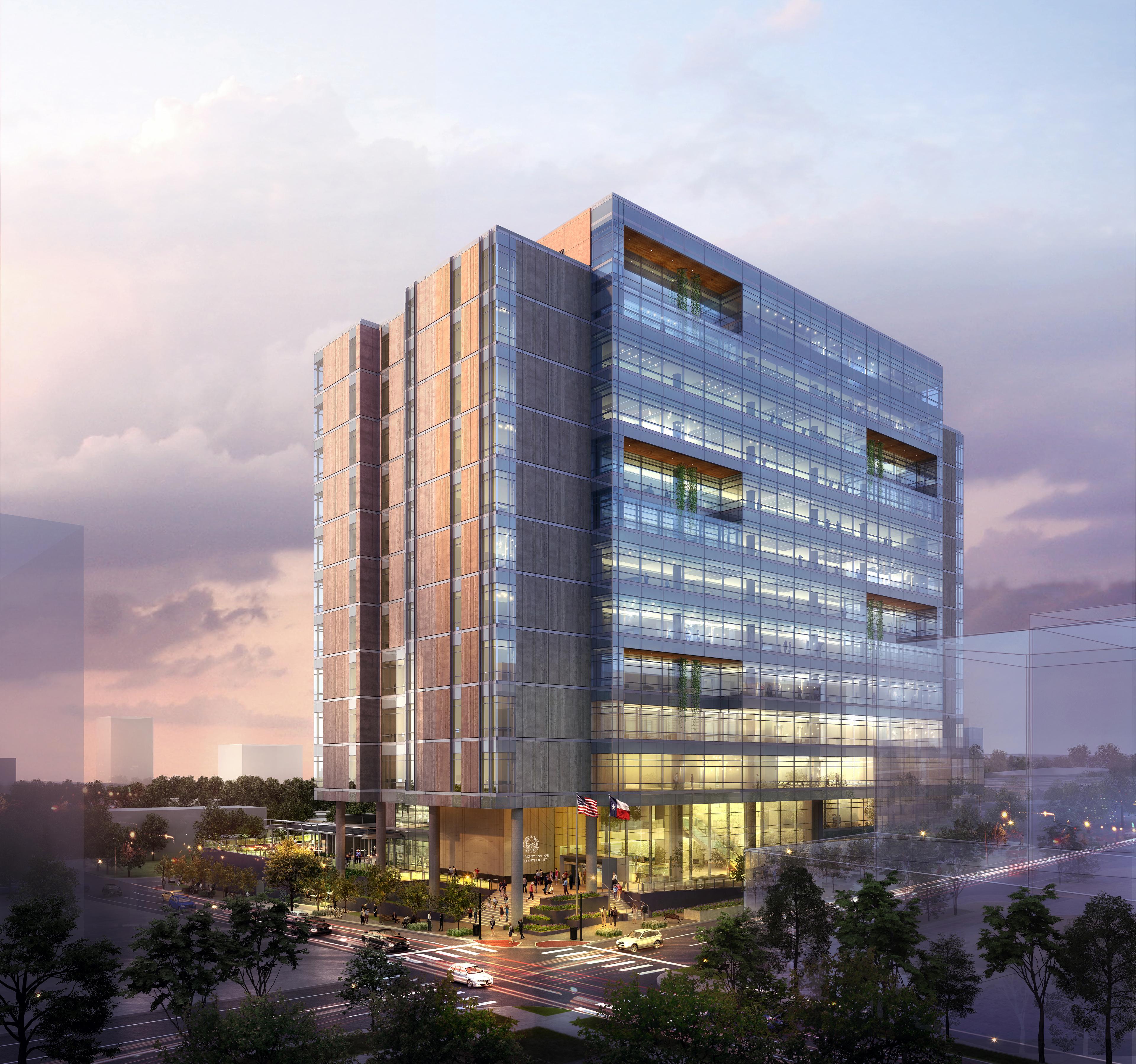
Rendering
Rendering of the building late in the design process.
Impact
The courthouse gives Travis County a more accessible civic facility designed around dignity, public service, and community connection.
The facility consolidates courts and departments while adding public amenities, technology upgrades, and supportive spaces that improve the courthouse experience.
What Changed Because of This
01
Public Access
A downtown location, civic plaza, wider sidewalks, bike racks, and transit access make the courthouse easier to reach and navigate.
02
User Support
Childcare, self-help resources, conference rooms, and calmer public areas respond to the emotional realities of courthouse visits.
03
Civic Identity
Transparent façades, terraces, durable materials, and a welcoming entry create a courthouse that feels dignified without feeling closed off.

Our goal was to create a building that feels deeply rooted in its Texas context while fostering community interaction. Durable materials such as local limestone and blackened steel bring warmth and permanence to the architecture, while pedestrian-scaled spaces, outdoor gathering areas, and multimodal access make the project an active and inclusive destination.
Recognition
Engineering News-Record
Architizer
Austin Business Journal
Team